
.svg)
.svg)
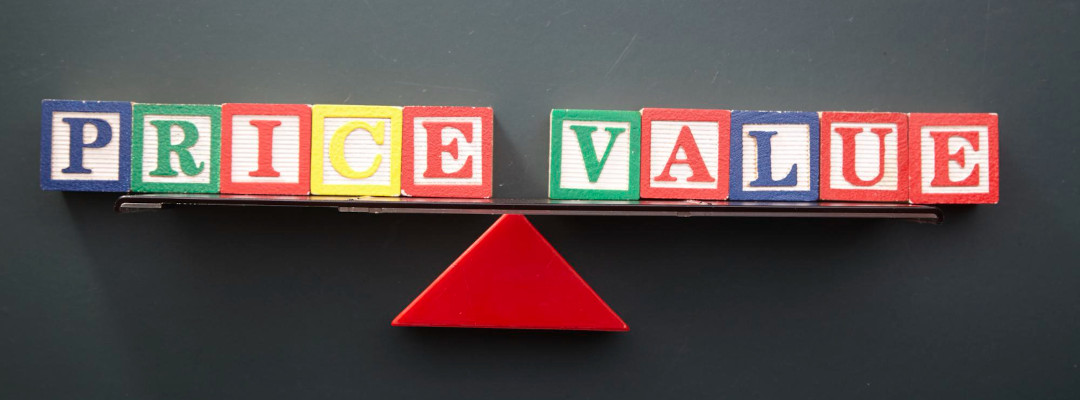
When a customer makes a purchase, they are not only paying for what they see, but for what they believe they are receiving. That judgement - quick, emotional and sometimes unconscious - is what we call perceived value. And that perception has more influence on the purchasing decision than the actual price, the product description or even the brand's reputation.
Understanding how this value forms in the customer's mind is essential if you want to build loyalty, justify higher prices or reduce basket abandonment. It's not about adding extras or dressing up your offer, it's about aligning what you deliver with what the customer expects to receive, and communicating it with clarity, consistency and emotion.
At seQura we understand what it means to face a customer who hesitates or walks away at the final click. That is why we explain how perceived value works and what you can do to strengthen it from today, without changing your product or lowering your prices.
What Is Perceived Value?
Perceived value is the customer's perception of what they receive compared to what they give up. It's not the price, nor the technical quality, nor the actual benefits. It's the idea the customer forms about what they are about to buy is worth.
This perception is built from many elements. It includes the tangible, such as the product's features, but also the emotional, such as the feeling of trust or the status it projects. That is why two people can pay the same amount for the same thing and feel they have made a completely different purchase: one with enthusiasm, the other with resignation.
Perceived value has five characteristics that make it both decisive and unpredictable:
- It is subjective, because each customer values things differently according to their needs, context and emotions.
- It is comparative, since it's formed in relation to other available options.
- It is multifactorial, because functional, emotional, social and economic factors all come into play.
- It is emotional, because it's not based solely on logic or data, but on intuitions and associations.
- It is dynamic, because it can change over time, with experience or with context.
The key is to understand that you are not selling a product, you are selling a perception of value. And that can be built, shaped and communicated.
How Does Perceived Value Form in the Customer's Mind?
Perceived value is built before the purchase, in a matter of seconds, from ideas, emotions and references the customer already holds. It's not a rational process. It's an automatic evaluation, often unconscious, influenced by both what they see and what they expect.
One of the key factors is the anchoring effect: the first figure the customer sees (even if it has nothing to do with your product) shapes their idea of what is "expensive" or "cheap". The framing effect also plays a role: saying "reduced price" is not the same as "save £30", even if it means the same thing.
Factors such as brand reputation, other customers' opinions or the design of the website are equally decisive. The shopping experience conveys value just as much as the product itself. And if the perceived effort is low, the value increases.
Working on a solid pricing strategy helps create a clear frame of reference so that the customer perceives greater value from the very first moment.
The Relationship Between Perceived Value and Customer Loyalty
When a customer perceives that they have received more value than they expected, they don't just buy: they come back. That feeling of "it was worth it" is the foundation of loyalty.
Perceived value doesn't only drive the first purchase. It also reduces the need to compare prices, lowers sensitivity to competitors' discounts and increases tolerance towards occasional mistakes. A customer who perceives value is more patient, more consistent and more willing to recommend.
There is a direct relationship between perceived value, satisfaction and loyalty. If the value the customer feels exceeds the effort they made, financial, emotional, logistical, the bond with the brand strengthens. And that bond becomes a habit, a spontaneous recommendation and repeat purchases.
This doesn't happen by chance. Brands that work on perceived value consciously achieve better loyalty results because they don't merely meet expectations, they exceed them.
And when that happens, the customer doesn't look for alternatives. They have already found a brand that fits what they need and what they believe they deserve.
You can find more practical ideas here on how to build customer loyalty by working on perceived value.
Strategies to Increase Your Brand's Perceived Value
Improving perceived value doesn't require changing your product or lowering the price. What changes is the perception, and that is built through the details.
One of the most effective strategies is showing the process. Telling the story of how you do what you do, what materials you use, how long it takes, who is behind it. This transforms what you sell into something with a history, with care and with intention.
You can also work on emotional value. Use storytelling to connect with the customer's aspirations, with the way they see themselves, with the life they want to have. A message that appeals to identity generates more impact than a list of features.
Other strategies that raise the perception of value without changing the product:
- Design and presentation: good packaging, a clear website and a well-crafted image automatically raise the value the customer attributes to your brand.
- Personalisation: adapting your message, your options or your service creates the idea that you made it with them in mind.
- Social proof: showing authentic reviews, real cases and external validation provides reassurance and builds trust.
- Guarantees and trust: offering clear returns, fast and frictionless support reduces perceived risk and increases the mental value of the service.
The key is that everything surrounding your product, both tangible and intangible, should say the same thing: that this is worth more than it costs.
Customer reviews are one of the most direct ways to increase perceived value without modifying your product or your price.

.png)
How to Measure Perceived Value
Although it is a subjective perception, perceived value can be measured with the right tools. You don't need to guess whether the customer finds it valuable: you can ask them, observe their behaviour and analyse their decisions.
There are three key indicators:
- NPS (Net Promoter Score): measures the likelihood of the customer recommending your brand. If they recommend it, it's because they feel they received more value than expected.
- CSAT (Customer Satisfaction Score): measures satisfaction after an interaction or purchase. When CSAT is high, perceived value has been high too.
- CES (Customer Effort Score): evaluates how easy it was for the customer to resolve what they needed. The easier it was, the higher the perception of value.
In addition to these metrics, you can use specific surveys in which the customer assesses:
- whether the product delivers on what you promised;
- whether they believe they received something more than they expected;
- whether they would pay the same (or more) to repeat the experience.
Another approach is behavioural analysis:
- Is the average order value increasing?
- Do they return to buy without a discount?
- Do they recommend or share?
- Do they tolerate small mistakes well?
Perceived value is not always spoken. But it shows in how the customer acts once they have paid.
Examples of Perceived Value Across Different Brands
The brands that sell the most are not always those that offer the most, but those that manage to make the customer perceive more. Perceived value explains why someone pays £4 for a coffee or £1,200 for a mobile phone.
Apple does not sell technology, it sells status, design and simplicity. The closed ecosystem, the seamless experience and the aspirational value mean the customer doesn't compare prices: they simply want it.
Starbucks does not sell coffee. It sells a space, an identity, a pause in the day. The atmosphere, the personalisation and the familiarity generate a perception of value that justifies high prices.
Nike turns a trainer into a symbol of effort and self-improvement. The storytelling, the brand ambassadors and the design innovation build a powerful emotional connection.
Rolex sells time, yes, but above all it sells history, heritage and prestige. And that is worth far more than the materials a watch is made from.
Tesla combines innovation, sustainability and design. The customer is not just buying a car: they are buying a vision of the future.
And in e-commerce?
SeQura is a clear example of how to increase perceived value without touching the product. Offering instalment payments, pay-after-receipt or personalised plans turns a barrier into an advantage. The customer feels they are getting more without paying more. And that, in their mind, is worth a great deal.
How Can seQura Help You Strengthen Perceived Value?
SeQura strengthens perceived value by making the purchasing process more accessible, more flexible and more trustworthy. It doesn't change what you sell , it changes how the customer experiences it.
When a merchant offers options such as paying later, splitting into 3 or spreading the payment over up to 24 months, the message it sends is this: "we trust you, we want to make it easy for you, you choose how to pay". And that generates additional value that the customer perceives even before receiving the product.
The key benefits:
- Friction reduction: no need to register, upload payslips or fill in forms. Just an ID, a mobile and a card.
- A sense of control: the customer can pay at their own pace, adjust instalments or settle the balance whenever they wish.
- Immediate trust: if they can receive the product before paying for it, perceived risk is reduced.
- Higher average order value: when there is perceived value, the customer feels comfortable buying more.
Furthermore, seQura improves key metrics such as:
- conversion (+30%)
- average order value (+89%)
- recurrence (+25%)
And it does so without any technical effort on the part of the e-commerce, with rapid integration, human support and a mobile-optimised experience.
In short, seQura turns the most delicate moment of a purchase, the payment, into an opportunity to convey value. And that shows in both sales and loyalty.
Frequently Asked Questions About Perceived Value
What is the difference between perceived value and customer satisfaction?
Perceived value occurs before the purchase; satisfaction, afterwards. The customer first evaluates whether what you offer is worthwhile (perceived value). Then, once they have bought and tried it, they decide whether it was worth it (satisfaction). You may have an excellent product, but if the perceived value is low, they will not buy it.
How does packaging or design influence perceived value?
Design is the first point of contact with value. Good packaging or a well-structured website does not only attract, it also conveys professionalism, care and quality. The customer interprets that if you take care of those details, the product will be good too. That is why packaging can make a product feel 20% more valuable in the buyer's mind.
Can I improve perceived value without touching the price?
Yes, and you should. You can increase perceived value by improving customer service, personalising the experience, showing the production process, reinforcing the brand story or simplifying the journey. Many brands raise their perceived value without moving their price by a single penny. What changes is not how much it costs, but how it's perceived.
What mistakes can reduce my brand's perceived value?
The most common include promising more than you deliver, having a confusing message, treating everyone the same or failing in the details. Response time, slow delivery or poor design also have an impact. Any inconsistency between what you say and what you do reduces value. And once it's lost, it's very difficult to recover.
Does perceived value matter more in premium sectors?
It is critical in premium sectors, but decisive in all of them. In luxury sectors, perceived value justifies high prices. But in mass-market sectors it also plays a role: trust, convenience, clarity… all of this builds value. And it's what makes customers choose you even when you are not the cheapest option.
What is the relationship between perceived value and emotional loyalty?
Emotional value is the foundation of loyalty that cannot be bought with discounts. When a brand connects with the customer's emotions, it generates something stronger than satisfaction: it generates attachment. And that emotional loyalty withstands the passage of time, occasional mistakes and competition far better.


.svg)